
The Psychology of Procrastination: Why You Delay and How to Stop
CONKA · 14 Jul 2026 · 4 min read
Procrastination is not laziness, and it is not a time-management problem. It is an emotion-regulation problem: you put off a task to avoid the discomfort it makes you feel, and the relief you get from avoiding it quietly trains you to do it again. Fix the emotional loop and the behaviour changes with it.
Procrastination is emotional, not a character flaw
Procrastination is the voluntary delay of something you intended to do, despite knowing the delay will cost you. Roughly one in five adults are chronic procrastinators. The task itself is rarely the problem. The trigger is the feeling the task brings up: boredom, anxiety, self-doubt, or the fear of doing it badly. Avoiding the task removes the feeling, and that quick hit of relief is what keeps the pattern alive.
What happens in your brain
Two systems are competing. Your prefrontal cortex handles planning and long-term goals. Your limbic system handles immediate emotion. When a task triggers discomfort, the limbic system pushes for instant relief, and it usually wins, because relief now beats a reward later. Every time you give in, avoidance is reinforced as the fastest way to feel better. That is why willpower alone rarely fixes it. You are not fighting a scheduling gap, you are fighting a learned emotional reflex.
The six common triggers
Most procrastination traces back to one of these:
- Fear of failure. If the work defines your worth, not starting protects you from finding out you fell short.
- Perfectionism. An impossibly high bar makes starting feel pointless, so you wait for conditions that never arrive.
- Task aversion. Boring, ambiguous, or unpleasant tasks give the brain an easy reason to look away.
- Unclear goals. A vague task has no obvious first step, and no first step means no start.
- Low self-belief. If you doubt you can do it well, avoidance feels safer than trying.
- Mental fatigue. A tired, depleted brain has less capacity to override the pull toward the easy option.
Strategies that actually work
Because the root is emotional, the fixes are too:
- Name the feeling. Ask what the task is making you feel. Labelling the emotion takes some of its power away.
- Shrink the first step. Lower the activation energy until starting is almost effortless. Open the document. Write one sentence. Momentum follows action, not the other way round.
- Use if-then plans. Decide in advance: when it is 9am, I will write the first paragraph. Specific plans beat vague intentions.
- Design your environment. Put the distraction out of reach and the task within it. Willpower is unreliable, friction is not.
- Break it down. A large task is a wall. A list of small tasks is a staircase.
- Drop the self-criticism. Self-compassion after a slip predicts less future procrastination, not more. Guilt fuels the cycle.
- Work with your energy. Schedule the hardest work for when your focus is naturally highest, not whenever happens to be left over.
Where cognitive support fits
Behavioural strategies do the heavy lifting. But every one of them is harder when your brain is running on empty. Activation energy is higher when you are scattered, under-slept, or mentally fatigued, which is exactly when the limbic system wins most easily.
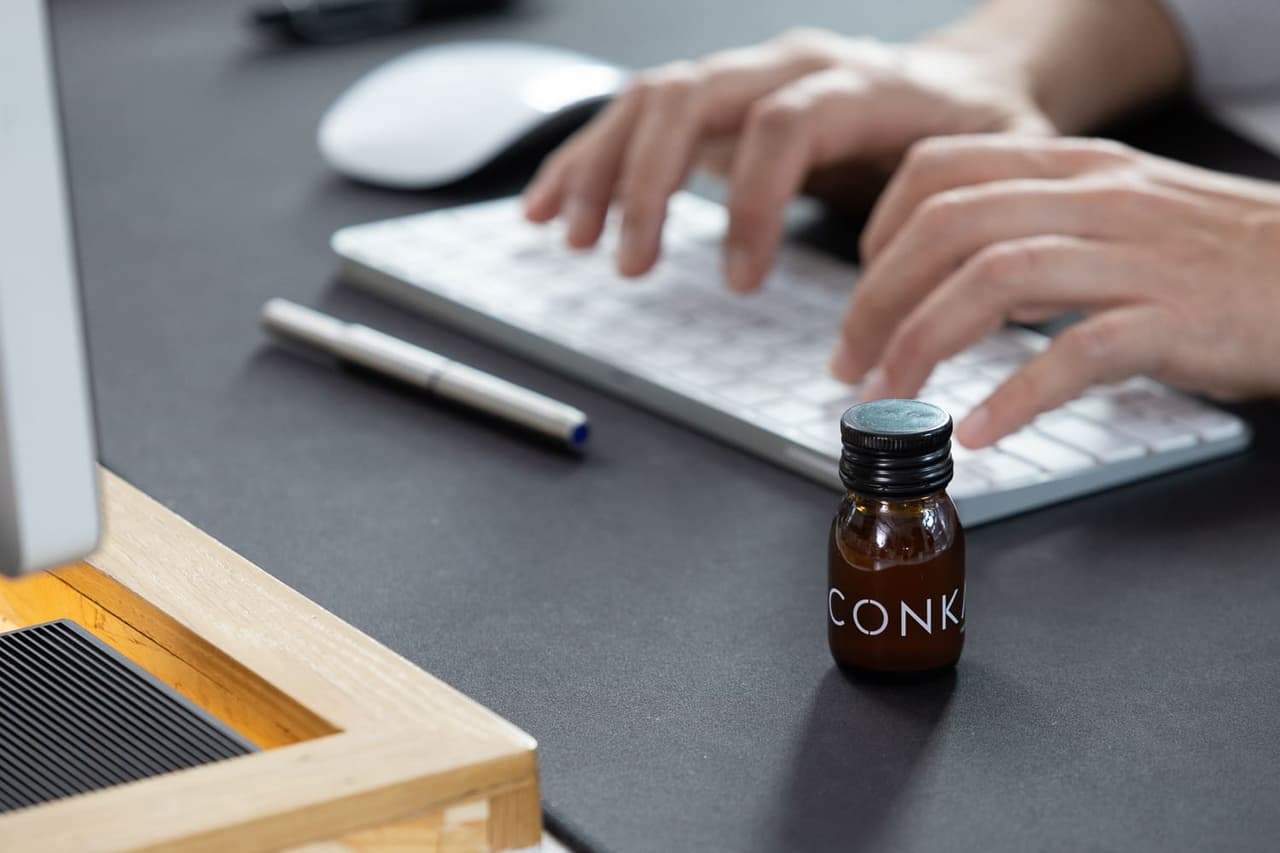
That is the case for a consistent daily routine. CONKA Flow is a morning brain shot built for the start of the day, when you set the tone for whether you get going or get stuck. It is Informed Sport certified, tested against more than 280 banned substances per batch, and built on formulation work backed by research with Durham and Cambridge. Every order is covered by a 100-day money-back guarantee, so trying it costs you nothing but the decision to start.
Frequently Asked Questions
Q: Is procrastination a sign of laziness?
A: No. Lazy implies you do not want to act. Procrastination is the opposite: you want to act, you intend to, and you still delay because the task triggers a feeling you would rather avoid. It is an emotion-regulation pattern, not a lack of effort.
Q: Can you stop procrastinating for good?
A: You can change the pattern, though it is a skill rather than a switch. Because procrastination is a learned response, it can be unlearned with consistent strategies that address the feeling behind the delay, not just the schedule around it.
Q: Does procrastination get worse under stress?
A: Usually, yes. Stress and fatigue reduce the brain's capacity to override the pull toward immediate relief, so the avoidance reflex takes over more easily. Managing your energy and stress load directly reduces how often you stall.
Q: Is procrastination linked to ADHD?
A: It is common alongside ADHD, because differences in attention regulation and impulsivity make immediate rewards harder to resist. Procrastination on its own is not a diagnosis, and most people who procrastinate do not have ADHD.
More reading

How Leeds United Adopted CONKA's Data Analytics Tools
CONKA's brain health supplement is now used by Leeds United FC after a cold call, a one-month trial, and a 10.4% average improvement in player cognition. Here is how it happened.
14 Oct 2026

Mental Performance Shot for Banking: The Revolut Trial
CONKA ran a 14-day mental performance trial with Revolut. Here is what happened when a brain health supplement met one of the world's most demanding sales floors. Read the full results.
12 Oct 2026
Improve Cognitive Performance: Habits With Real Evidence
Want to improve cognitive performance? This evidence-based guide ranks the habits and nootropic ingredients that actually work, backed by clinical research. Read the science.