
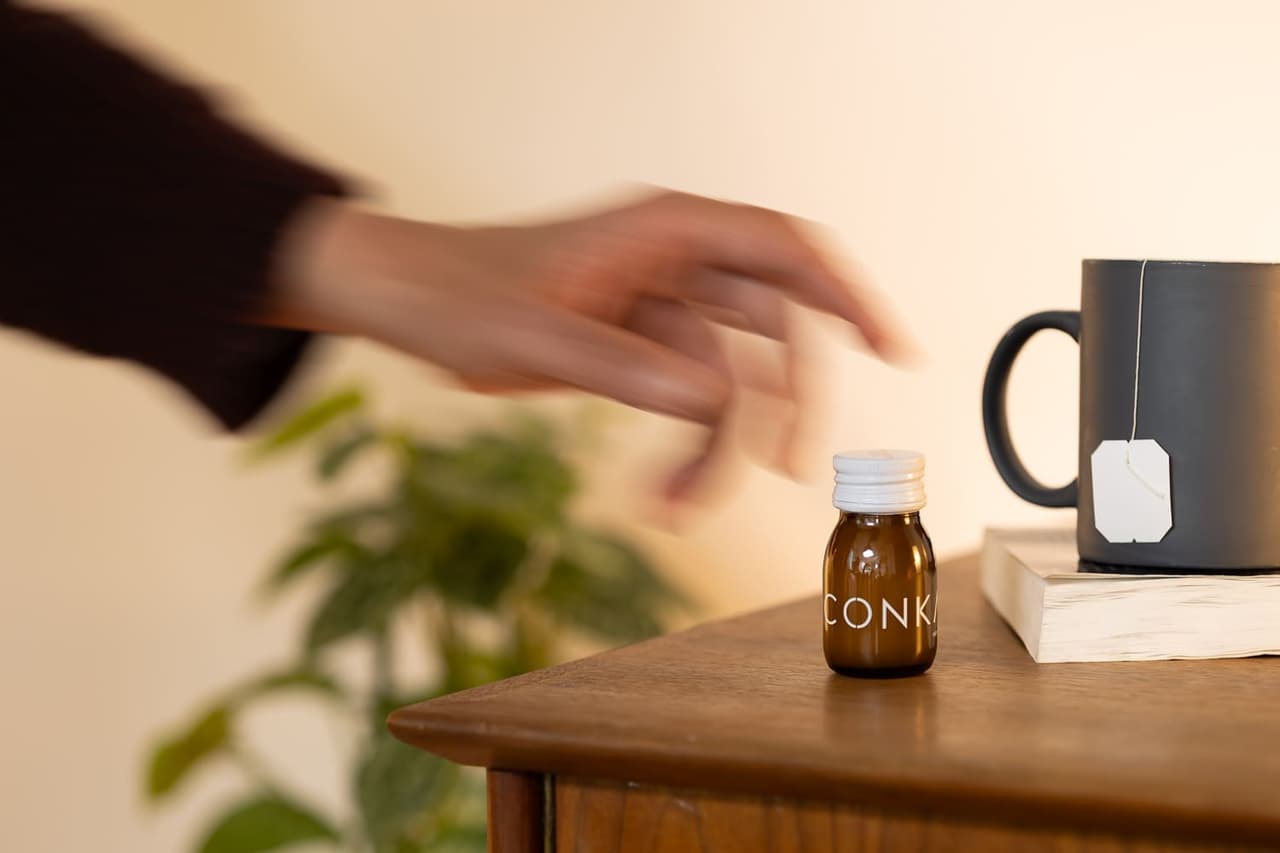
Only a clinician can answer that one, and this article does not try to. What it can do is explain what is different about an ADHD brain in plain terms, because most people who ask the question are not looking for a label, they are looking for a reason. Roughly 26% of people report ADHD traits, and 47% of likely-ADHD adults in the UK are undiagnosed, so the question is a common one. Below is the mechanism, symptom by symptom, and where nutrition genuinely fits in, which is alongside proper treatment, never instead of it.
What's actually happening in your ADHD brain?
In simple terms, an ADHD brain tends to run low on signal from two chemical messengers, dopamine and norepinephrine, especially in the front of the brain that handles focus, planning and self-control. It is not that these chemicals disappear, it is more like a radio signal that keeps cutting in and out rather than a station that has gone dead.
Because that signal is patchy, everyday things like sitting still, starting a boring task, holding a thought for five seconds, or shrugging off a small comment all take real effort, effort other brains spend without noticing.
CONKA is a food supplement, not a treatment for ADHD. What follows explains general research, not personal medical advice.
Losing track of objects and time
The same circuit that lets you hold a thought in your head, "where did I just put my keys", is the one running low on fuel, so information does not stick the way it should (Arnsten and Li, Biological Psychiatry, 2005). Alpha GPC supplies choline, the raw material the brain uses to build acetylcholine, the messenger tied to laying down and holding onto memories. Sunflower Lecithin is a natural source of phosphatidylcholine, a core building block of the neuron membranes signals travel across, and Vitamin B12, as methylcobalamin, is a cofactor needed to produce acetylcholine alongside dopamine, norepinephrine, serotonin and GABA.
Struggling to start tasks
There is a kind of starter motor in the brain, the locus coeruleus, that runs on norepinephrine and gets you from "I should do this" to actually doing it. When it is underpowered, you can genuinely want to start something and still not move (Aston-Jones et al., Biological Psychiatry, 1999). Alpha GPC produced faster processing speed than caffeine in a clinical comparison, with less jitteriness, a cleaner nudge to that starter motor (DOI: 10.1186/1550-2783-12-S1-P41). Vitamin C is the cofactor for the enzyme that converts dopamine into norepinephrine, the exact step that turns "I should" into "I am".
Can't stop the small loop, doomscrolling and picking
Repetitive habits you cannot seem to override trace back to a different chemical, glutamate, getting stuck in a loop in the brain's reward centre, alongside the dopamine story most people know (Grant and Chamberlain, glutamate reward-circuit mechanism). NAC resets glutamate balance; in a trial of 66 adults it significantly reduced compulsive skin-picking versus placebo (PMID: 27007062).
Brain fog that won't lift
That foggy, mentally underwater feeling is different from an ordinary attention lapse. It is linked to low-grade inflammation, oxidative stress and dips in cellular energy quietly slowing down how efficiently brain cells fire, all day long. Turmeric with Black Pepper improved working memory and cut fatigue in a placebo-controlled trial, with piperine letting the body actually absorb the curcumin (PMC7352411). ALCAR ferries fatty acids into mitochondria for energy and supports acetylcholine synthesis; in a randomised trial, L-carnitine significantly reduced physical and mental fatigue versus placebo (PMID: 18065594). Alpha Lipoic Acid improves insulin-stimulated glucose uptake into brain cells, and Glutathione is the brain's primary internal antioxidant, clearing oxidative byproducts so you reset properly overnight.
Rejection sensitivity
Feedback and criticism get processed through serotonin pathways as well as dopamine ones, so a small comment can land in the brain like a far bigger threat than it really is (Oades, Expert Review of Neurotherapeutics, 2007). Ashwagandha has trial evidence for lowering anxiety scores directly, not just cortisol, turning the emotional volume down a notch (PMID: 32800311).
Restless, can't sit still
Your brain's brake-pedal chemicals, dopamine and norepinephrine, are not firing strongly enough at the front of the brain, the part that says stay seated and wait your turn. So your body reaches for movement instead, because motion becomes a stand-in source of stimulation (Arnsten and Li, Biological Psychiatry, 2005). Ashwagandha lowers the stress hormone cortisol, taking fuel away from the restlessness rather than acting on the focus circuit directly (PMID: 32800311).
Snapping at people, low frustration tolerance
Your threshold between "this is mildly annoying" and "this is unbearable" is set by serotonin and stress-reactivity circuits. When those are dysregulated, ordinary friction can trigger an outsized reaction (Oades, Expert Review of Neurotherapeutics, 2007). Lemon Balm took the edge off people's stress response in a placebo-controlled study, calming the reaction without sedating you (Kennedy et al., Psychosomatic Medicine, 2004).
Wired at night, poor sleep
The same arousal system that is meant to power down at night can get stuck switched on in ADHD brains. It is not about too much caffeine, the system itself is running hot (Berridge and Waterhouse, Brain Research Reviews, 2003). Rhodiola Rosea significantly reduced fatigue and improved mental performance for night-shift doctors in a clinical trial, and neither CONKA shot contains caffeine (PMID: 11081987).
Sluggish start, brain won't warm up
Before the brain's attention networks can properly switch on, they need blood flow. Think of it as warming the engine before the car drives properly. Bilberry belongs to the anthocyanin family of plant compounds; a 2024 review of 14 trials linked anthocyanins to better working memory and attention (PMC11775034). Ginkgo Biloba's traditional use is built on supporting cerebral circulation, though to be upfront about it, a 2012 meta-analysis found no significant cognitive benefit in healthy adults specifically, so the circulation mechanism is real but the boost evidence in healthy people is not there yet (Laws et al., Human Psychopharmacology, 2012).
ADHD by the numbers
- 26% of people report ADHD traits
- £10k lower yearly earnings with untreated ADHD
- 47% of likely-ADHD UK adults are undiagnosed
Sources: Priory Group; ADHD Evidence; King's College London.
Struggling with small decisions
Decision-making leans on working memory and dopamine reward. When either is disrupted, even small choices stall or default to whatever is loudest. Alpha GPC in CONKA Clear supports working memory, so the everyday decisions that pile up stop feeling like a wall.
Do brain-training apps actually work?
Most brain-training apps are games with a leaderboard. The CONKA app is different. It is built around an FDA-cleared, CE-marked cognitive assessment developed by Cambridge University and used in clinical settings, reading impulsivity and focus in a test that takes 1 minute 15 seconds. So when you see your focus score move, it is measuring something real. It is free, and it is not a diagnostic tool for ADHD; if you want an answer to the diagnosis question, that route runs through your GP.
Built for the nights you doom-scrolled instead of sleeping
Racing thoughts at midnight, one more scroll turning into forty minutes, then a morning that starts already behind. A rough relationship with sleep is something a lot of people with ADHD recognise, and a late one drinking does not help the next day either. Glutathione, your body's master antioxidant, clears acetaldehyde, the toxin behind hangover symptoms, significantly faster.
Built to absorb bad nights:
- Rhodiola Rosea, shown in night-shift physicians to cut fatigue and sharpen mental performance. (PMID: 11081987)
- Glutathione, clinically shown to speed clearance of acetaldehyde, the toxin behind hangovers. (PMC11479010)
- Ashwagandha, helps lower cortisol and the daily stress load. (PMID: 32800311)
- Alpha Lipoic Acid, clears the oxidative stress of short sleep.
All in two 30ml shots, morning and night. CONKA does not erase a bad night, but it gives your brain a real head start on the next one.
Which brain supplements are actually proven to work?
Proof matters. Most focus supplements are hiding a simple trick: caffeine. It works briefly, then comes the crash, the jitters. By the original definition of the word nootropic, a substance with side effects like caffeine is not even a true nootropic, it is a stimulant. The only real way to know whether a supplement works is randomised controlled trial evidence. Not a testimonial, not a before-and-after photo, a trial. CONKA has run them more than 20 times:
- +14.86% sharper thinking versus placebo
- 80% improved cognitive scores
- +19.3% sharper focus in professional athletes
- 75% improved in under three weeks
From CONKA cognitive trials, including a six-week randomised double-blind placebo-controlled trial with 29 professional rugby players.
What people notice
"My energy feels more consistent, and I can stay sharp later in the day without the downside."
Aaron H., verified, Flow and Clear
"In the first few days of taking Flow, I relied less on the jitters of caffeine to get me through a day."
Ankita K., verified, Flow and Clear
"What I didn't expect was being able to take something after work, lock back in for the hustle, and still sleep well."
Sam J., verified, Flow and Clear
Frequently Asked Questions
Q: Does CONKA contain caffeine?
A: No. Both CONKA Flow and CONKA Clear are completely caffeine-free. There is no stimulant in either formula, which means nothing to spike from and nothing to crash off, and it is why Clear can be taken in the afternoon without the sleep problem an afternoon coffee causes.
Q: Can I take CONKA alongside ADHD medication?
A: There is no known direct interaction between CONKA and stimulant ADHD medication such as methylphenidate or amphetamine, but check with your prescriber before combining them. CONKA is caffeine-free and is not a stimulant, and it is not a replacement for prescribed ADHD treatment. Many people take it for everyday focus and calm; it is not a medicine and does not treat ADHD.
Q: Is CONKA a replacement for ADHD medication?
A: No. CONKA is not a replacement for prescribed ADHD medication, and it does not diagnose or treat ADHD. It is a caffeine-free food supplement that supports everyday focus and calm, not a stimulant and not a medicine. Plenty of people with ADHD take it for daily focus alongside whatever their prescriber has them on, but it sits beside prescribed treatment rather than in place of it.
Q: When will I notice results?
A: Day 1: sharper focus and steady energy, no crash. Day 14: adaptogens like Ashwagandha reach full strength and stress rolls off faster. Day 30: your baseline sits measurably higher. Across 150+ tested users and 5,000+ cognitive tests, the average score improvement was +28.96%.
Q: How do I take CONKA?
A: Two shots, ten seconds each. Flow in the morning to set up your focus for the day. Clear in the afternoon, right when most people hit the dip. Straight from the bottle. No powders, no mixing, no timing windows.
Q: What if it doesn't work for me?
A: Then you get your money back. Try CONKA for up to 100 days, and if you are not satisfied, contact us for a full refund. No returns needed, no questions asked. That is the 100-day money-back guarantee: we are confident enough in the product to take the risk for you.
More reading

ADHD Brain Fog: Why They Overlap and How to Manage Both
ADHD brain fog is real, distinct, and manageable. Discover the neuroscience behind why ADHD and brain fog co-occur, plus evidence-informed nutrients and routines that support clarity. Read now.
Natural Adderall Alternatives: What Nootropics Actually Do
Natural Adderall alternatives are attracting serious attention from high performers who want focus without the side effects. Here is what the evidence says.
29 Sept 2026
Nootropics for ADHD: What the Science Actually Says
Nootropics for ADHD can sharpen focus and support neurotransmitter balance. Discover the evidence-based ingredients high performers use to think clearly.
29 Sept 2026