
Natural Adderall Alternatives: What Nootropics Actually Do
CONKA · 29 Sept 2026 · 8 min read

What are natural Adderall alternatives? Natural Adderall alternatives are nootropic compounds that support dopamine and norepinephrine activity through physiological pathways rather than by forcing neurotransmitter release the way amphetamines do. For founders, athletes and professionals managing demanding cognitive loads, understanding the distinction matters more than the marketing.
The Honest Problem With Adderall as a Productivity Tool
Adderall is an amphetamine. It crosses the blood-brain barrier and interacts with Trace Amine Associated Receptor 1 (TAR1) and vesicular monoamine transporters (VMAT2), reversing their direction and forcing stored dopamine and norepinephrine out of neurons in a flood rather than a signal.

That mechanism creates a compounding problem. Research has demonstrated that amphetamines can be toxic to neurons over time, reducing levels of dopamine, norepinephrine and their transporters, impairing receptor function and dendrite growth. This is why tolerance builds. The dose that worked in month one does not work in month six.
There is a second practical problem for anyone using Adderall to study or to perform. Long-term memory consolidation happens during slow-wave sleep. What you learn during the day is integrated into durable memory at night. Adderall causes insomnia as a documented side effect. So the drug actively disrupts the very process it is supposed to support.
Why There Is No True "Natural Adderall"
This needs saying plainly: there is no natural substance that replicates the TAR1 and VMAT2 transporter-reversal mechanism of amphetamines. Anyone selling an "over-the-counter Adderall replacement" is not being accurate.

What natural nootropics can do is increase dopamine and norepinephrine through upstream pathways. At sufficient doses, some compounds activate TAR1 receptors, contributing to improved mood and working memory through a gentler, non-neurotoxic route. The goal is not to copy Adderall. The goal is to solve the underlying problem: insufficient brain energy, poor attentional control and cognitive fatigue.
Rhodiola Rosea: The Adaptogen With the Strongest Focus Evidence
Rhodiola Rosea is one of the most researched natural focus compounds for high-output environments. Rhodiola Rosea has been studied extensively for its effects on stress, fatigue and cognitive performance -- see the full research summary on Examine.com. It influences dopamine, norepinephrine, serotonin and beta-endorphin levels. In controlled trials, Rhodiola Rosea supplementation shortened reaction time and total response time, with a greater proportion of correct responses compared to placebo.[1] Improvements in stress symptoms were observed within three days of supplementation.[2]
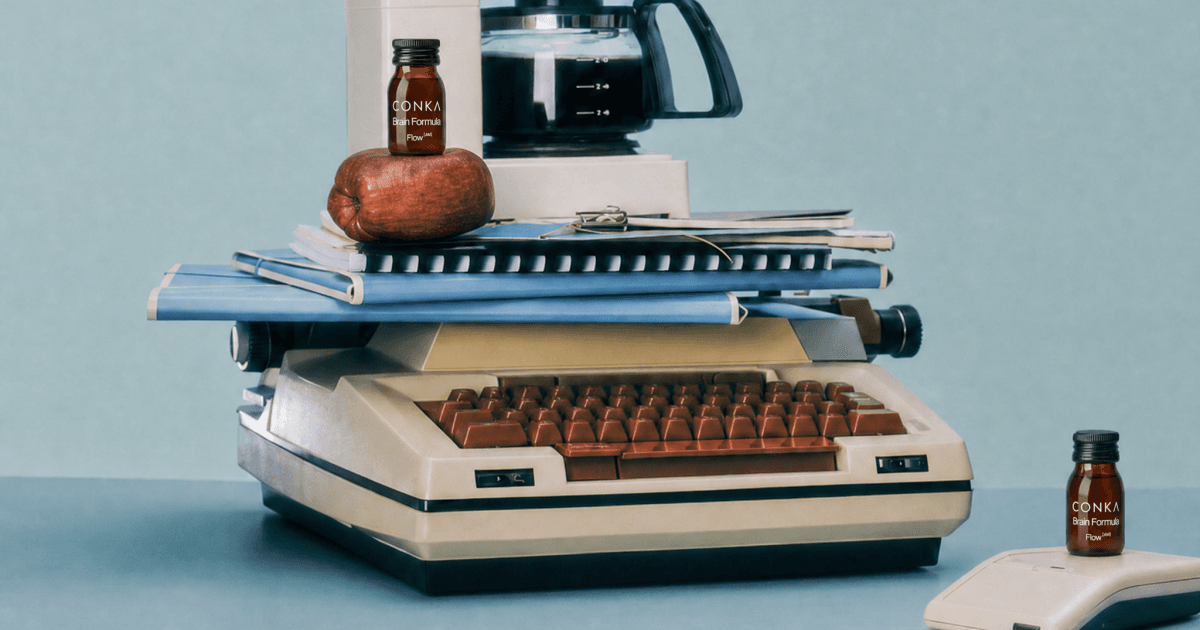
For professionals or athletes under sustained pressure, the adaptogenic profile of Rhodiola matters as much as the cognitive signal. It modulates the stress response without sedation, which is why it features in the CONKA Flow morning shot alongside Ashwagandha, Lemon Balm, Turmeric, Black Pepper and Bilberry. Flow is built for the start of the working day: taken before the screen opens, before the inbox decides your agenda.
CONKA holds UK patent GB2620279 on its formulation, and the product has been Informed Sport certified, meaning every batch is independently tested to the standard required by professional athletes.
Ashwagandha: HPA Axis Modulation, Not Just "Stress Relief"
Ashwagandha is often described vaguely as a stress-reducer. Ashwagandha has been studied extensively for its effects on cortisol, stress resilience and cognitive function -- see the full research summary on Examine.com. The mechanism is more specific: it modulates the hypothalamic-pituitary-adrenal (HPA) axis, which governs cortisol release under pressure. Chronic cortisol elevation degrades working memory, narrows attentional bandwidth and disrupts sleep architecture. Ashwagandha addresses the neurochemical environment in which focus either functions or fails.

For high performers who carry cognitive load across twelve-hour days, this is not a marginal intervention. It addresses the background noise that prevents sustained concentration, which no stimulant can fix.
Alpha GPC and Ginkgo Biloba: The Afternoon Attention Pair
Alpha-glycerylphosphorylcholine (Alpha GPC) is a choline donor that supports acetylcholine synthesis, the neurotransmitter most directly involved in attention and working memory. Alpha GPC has been studied extensively for its effects on acetylcholine synthesis and cognitive performance -- see the full research summary on Examine.com. As a phospholipid precursor it also contributes to neuronal membrane integrity.
Ginkgo Biloba supports cerebral blood flow and has a documented role in attention maintenance under cognitive load. Ginkgo Biloba has been studied extensively for its effects on cerebral circulation and attention -- see the full research summary on Examine.com. Together, these two compounds form part of CONKA Clear, the afternoon shot designed for the five minutes before anything that counts: a pitch, a presentation, a critical decision. Your head is still in the last meeting. Clear is the reset before the one that matters.
CONKA Clear also contains Vitamin C, Glutathione, N-acetyl cysteine (NAC), Acetyl-L-carnitine (ALCAR), Alpha Lipoic Acid and Vitamin B12, providing antioxidant support alongside the cognitive substrate.
What Elite Performance Data Actually Shows
CONKA is not positioning itself against Adderall. It is positioning itself against the assumption that stimulants are the only option. Across 914 cognitive tests conducted through clinical trial programmes with Durham University and Cambridge University, CONKA's formulation demonstrated an 18.1% performance advantage over caffeine alone.
That number matters for the audience actually using stimulants. Caffeine is the baseline comparison point for most professionals. An 18.1% improvement on top of that baseline, without the neurotoxic risk profile of amphetamines, is a quantifiable argument.
CONKA is used by over 50 elite sports clubs including NFL teams, England Rugby and Premier League clubs. Informed Sport certification means athletes subject to drug testing can use it without risk. That is a higher verification bar than most nootropic stacks clear.
The Best Focus Energy Supplements Follow a System, Not a Single Compound
The mistake most people make when looking for supplements for focus and concentration is treating the search as a single-ingredient problem. Brain energy, attentional control and stress resilience are distinct systems. The compounds that address each one are different.

Flow first. That is the daily foundation, taken before the working day begins. Clear before it counts. That is the on-demand precision tool for moments of high stakes.
The system logic is the same reason clinical trials test formulations, not isolated compounds in isolation. CONKA's ingredients page sets out the full evidence base for each component. The homepage covers the founding story: Humphrey Bodington built this after a concussion sent him into six years of neuroscience research. That background is why the trial design with Durham and Cambridge went beyond typical supplement studies.
Natural Adderall alternatives nootropics work when the formulation is built on mechanism, not marketing. The question is whether the stack you are using has the clinical data to back the claim.
Frequently Asked Questions
Q: Do natural Adderall alternatives actually work for focus?
A: Natural compounds cannot replicate Adderall's transporter-reversal mechanism, but they can increase dopamine and norepinephrine through upstream physiological pathways. At effective doses, ingredients like Rhodiola Rosea have shown measurable improvements in reaction time and correct response rates in controlled trials, making them a credible option for cognitive performance support.
Q: What are the best focus energy supplements without stimulants?
A: The strongest evidence exists for adaptogenic and cholinergic compounds: Rhodiola Rosea for attentional control and stress resilience, Ashwagandha for HPA axis modulation, and Alpha GPC for acetylcholine-based working memory support. These work through distinct mechanisms and are most effective when combined in a formulation rather than used as isolated single ingredients.
Q: Are supplements for focus and concentration safe for professional athletes?
A: Safety for athletes depends on batch testing and certification, not just ingredients. Informed Sport certification, held by CONKA, means every batch is independently tested for prohibited substances. This is the standard required by professional sports bodies and used by NFL teams, England Rugby and Premier League clubs, among others.
Q: Why does Adderall stop working over time?
A: Amphetamines force dopamine and norepinephrine out of synaptic vesicles by reversing monoamine transporters. Over time, research shows this process reduces neurotransmitter levels, impairs receptor function and inhibits dendrite growth. The result is tolerance: the dose needed to achieve the same effect increases because the underlying neurochemistry has been depleted.
Q: How long does it take for nootropic stacks to show results?
A: It varies by compound. Rhodiola Rosea has shown stress-symptom improvements within three days in clinical research. Adaptogenic compounds like Ashwagandha typically require two to four weeks of consistent use to show HPA axis effects. Cholinergic support from Alpha GPC can have more immediate effects on working memory when taken before demanding cognitive tasks.
References
- Jowko et al. "Effects of Rhodiola rosea supplementation on mental performance, physical capacity, and oxidative stress biomarkers in healthy men." J Sport Health Sci. 2018. (source)
- Edwards et al. "Therapeutic Effects and Safety of Rhodiola rosea Extract WSW 1375 in Subjects with Life-stress Symptoms, Results of an Open-label Study." Phytotherapy Research. 2012. (source)
More reading
Nootropics for ADHD: What the Science Actually Says
Nootropics for ADHD can sharpen focus and support neurotransmitter balance. Discover the evidence-based ingredients high performers use to think clearly.
29 Sept 2026
Acetylcholine Nootropic Supplements: The Complete Guide
Discover how acetylcholine nootropic supplements boost focus, memory and cognition. Evidence-backed ingredients used by elite athletes and high performers.
29 Sept 2026
Brain-Boosting Diet: 11 Nutrients Your Brain Needs Daily
Your brain needs 11 essential nutrients daily. Learn which foods provide them, why modern diets fall short, and what high performers do about it.
29 Sept 2026