
The Facts:
Whilst it is true that 80% of soccer players will fail a concussion test after just 20 headers. Only 13% of sub-concussions come from heading the ball in soccer.
22% of injuries in soccer are concussions and contrary to popular belief it's the collision of the head with another body part that is the most common cause.
The header has had a lot of attention and bared much of the responsibility for the epidemic in soccer, positive action has been to remove the header from the under-12 soccer leagues, yet it begs the question of how impactful has/would the removal of the header be on brain health and performance in the sport?
What is the effect of 20 headers on the brain?
In the Premier League, there are an average of 101 headers per game, players have exceeded 20 headers on seven occasions during the 2020/21 season.
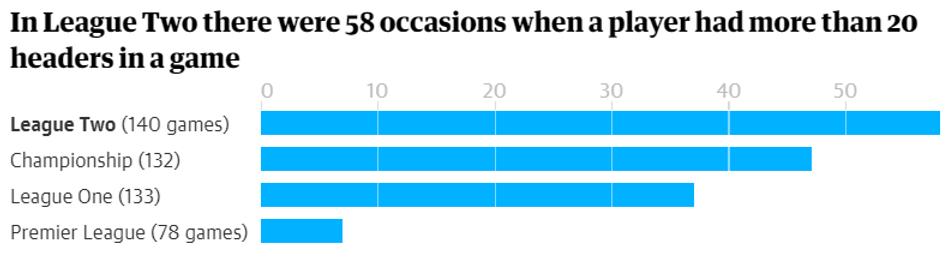
League Two footballers headed the ball more than 20 times in a match on 58 occasions!
Why is the 20-header threshold so important? Jake Ashton and James Roberts at Liverpool Hope University, found that 80% of players who head the ball 20 times in a drill will fail a common pitch-side test for concussion.
What we know is that it's the stealthy accumulation of sub-concussions that is brewing up a toxic environment inside the skull and causing damage and cognitive impairment, but it also makes one wonder what the lifetime effect of heading is.
Ashton commented, “We also saw detriments in spatial and digit working memory post-heading compared to a control group of no heading. The fact this was after just 20 headers is hugely worrying”
So What: What has CONKA done?
- The header count is higher in the lower leagues of soccer. CONKA has now prioritised a league two soccer club within the soccer arm of the CONKA x Durham University trial.
- Since we can't prevent sub-concussions in their entirety CONKA has been designed to perform as a cognitive maintenance product as well as a first aid approach to stall the neurobiological toxic storm following a head impact of any severity.
More reading

Harlequins CONKA Clinical Trial Results: What We Found
CONKA's double-blind placebo-controlled trial with Harlequins FC showed a 14.86% cognitive performance gain. Read the full results and the startup story behind them.
7 Oct 2026

Concussion Recovery: What the Neuroscience Actually Says
Concussion recovery takes longer than most athletes expect. Here is what the neuroscience says about post-concussion syndrome and evidence-backed nutritional strategies for brain repair.

Concussion Recovery: The Neurobiological Timeline
Concussion recovery takes longer than symptoms suggest. Discover the neuroscience, evidence-based nutrition protocols, and memory boosting supplements used by elite sports medicine practitioners.